
Hair Breakage Solutions - How to Fix Damaged Hair
Damaged Hair, Explained: Causes, Prevention, and Professional Repair
When hair starts snapping, splitting, tangling, or losing its shine, the usual advice is to apply a DIY mask and hope for the best. But damaged hair is not one single condition, and it cannot be corrected with one universal product.
The right approach begins with a professional diagnosis. Is the hair weakened by bleach? Is the cuticle rough from heat and friction? Is hard-water buildup making an already porous fiber more brittle? Does the hair need protein reconstruction, bond support, moisture, or a precision cut to remove split ends?
At Fabio Scalia Salons, we approach compromised hair like a “Hair ICU”: assess the damage first, stabilize the fiber, select the correct professional protocol, and create a plan that protects the hair between appointments. It is technical hair care delivered with the detail and refinement of a luxury salon experience.
The short answer: how do you fix damaged hair?
To fix damaged hair, first stop the source of repeated damage. Then identify whether the main issue is weakened bonds, a lifted cuticle, protein loss, mineral or metal buildup, moisture imbalance, or split ends. Professional treatments can reinforce the hair fiber, reduce friction and breakage, and improve softness and manageability. Split ends, however, must be cut.
What does “damaged hair” actually mean?
The visible hair above the scalp is a nonliving fiber made primarily of keratin. Because it does not regenerate like skin, a damaged strand cannot biologically heal itself. What professional hair repair can do is reinforce weakened areas, improve the condition of the cuticle, reduce friction, protect the cortex, and help prevent the damage from progressing.
Hair has three main structural regions:
- The cuticle is the protective outer layer. When its scales are smooth and aligned, hair reflects light and detangles more easily. When they become chipped or raised, hair can feel rough, dry, dull, or prone to knots.
- The cortex makes up most of the hair fiber and contains keratin structures that contribute to strength, elasticity, color, and shape.
- The medulla is the innermost region and may be absent in finer hair.
Within keratin, chemical connections—including strong disulfide bonds—help support the fiber’s structure. Bleaching and other oxidative chemical services can alter some of these bonds and weaken the hair. Published research on bleached hair has documented damage to the cuticle and cortex as processing becomes more aggressive, which is why expert application, controlled timing, and a realistic color plan matter.
One technical clarification is important: the hair matrix is living tissue located inside the follicle, where a strand is formed. Once the hair emerges above the scalp, the correct repair target is the hair fiber, especially its cuticle and cortex. Precise language matters because effective treatment starts with an accurate understanding of what can—and cannot—be changed cosmetically.
Can broken hair bonds really be repaired?
“Bond repair” is often used as a catchall phrase, but not every repairing treatment works in the same way.
Hydrogen and ionic interactions can change temporarily with water, heat, and pH. Disulfide bonds are stronger structural connections that can be altered by bleaching, permanent waving, relaxing, and other chemical processes. Bond-building technologies are designed to reconnect, reinforce, or create supportive links around weakened keratin structures, depending on the chemistry of the formula.
That does not mean a severely split strand becomes new again. The most accurate way to describe salon-grade hair bond repair is that it can improve the strength, resilience, and performance of compromised hair while helping reduce future breakage. A professional must still determine whether the hair needs bond support, protein, moisture, chelation, cuticle resurfacing, or a combination of treatments.
The most common causes of hair breakage
1. Overlapping bleach or color
Lightener works by oxidizing pigment inside the hair, but repeated or overly aggressive lightening can also weaken the fiber. Applying bleach over previously lightened areas, pushing past the hair’s safe limit, or attempting a dramatic transformation in one session can lead to loss of elasticity, excessive porosity, and breakage.
2. Excessive heat
Flat irons, curling irons, and blow dryers can gradually damage the cuticle and cortex when the temperature is too high, the tool passes repeatedly over the same section, or heat is applied without protection. Fine, lightened, fragile, and highly porous hair usually requires a more conservative temperature than thick, healthy hair.
3. Mechanical stress from brushing and styling
Hair can break through repeated tension and friction. Pulling through knots, brushing aggressively from the root, rough towel-drying, sleeping with wet hair, or wearing very tight styles can all weaken vulnerable strands.
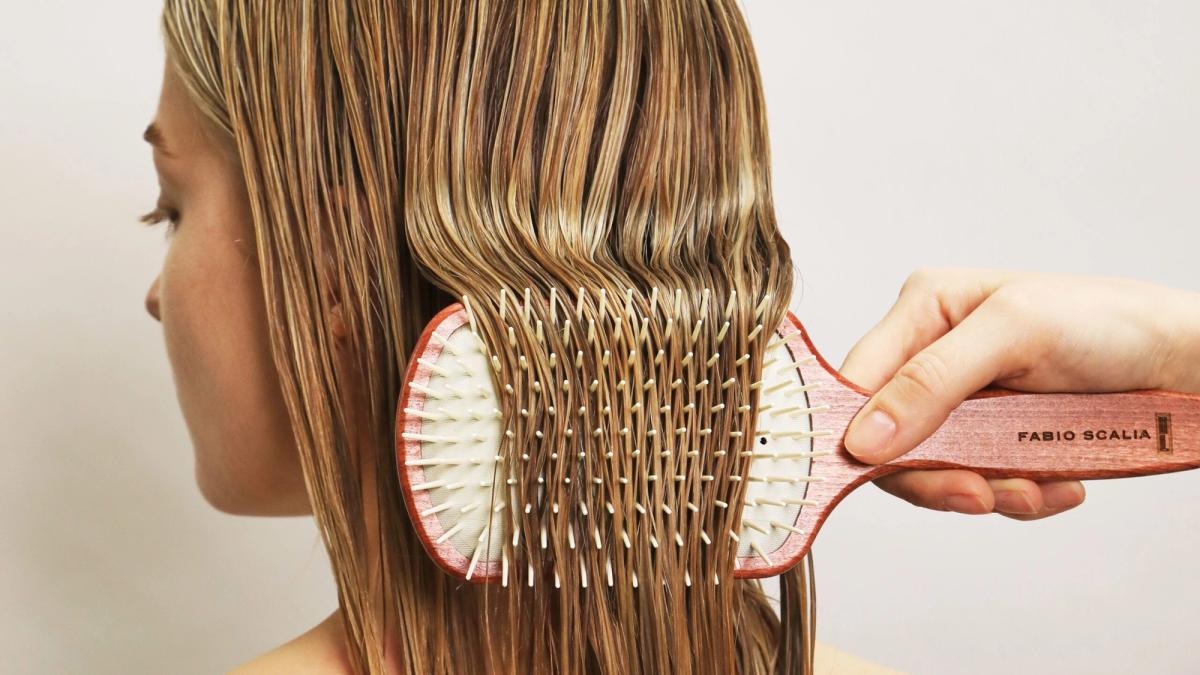
Tools matter, too. Poorly finished plastic combs may have seams or sharp edges that snag the cuticle, while metal brushes and barrels can become very hot during a blowout. For wet detangling, use a flexible, purpose-built detangling brush or a smooth, wide-tooth comb and work from the ends upward. For controlled smoothing and polishing, a quality boar-bristle brush can provide grip while helping distribute the scalp’s natural oils through the lengths.
4. Hard water and metal accumulation
Minerals and metals present in water can build up on or within porous hair. This can contribute to stiffness, dullness, inconsistent color results, and greater vulnerability during lightening. Damaged and bleached hair is especially susceptible because its increased porosity allows it to absorb more from the environment.
5. Skipping trims
Once an end has split, no mask can permanently fuse it back together. Conditioning products may temporarily smooth its appearance, but the split can continue traveling upward. Strategic trimming protects the length by removing damage before it advances farther along the strand.
Signs your hair needs professional help
Consider booking a professional hair-damage consultation if you notice:
- Short broken pieces around the crown, hairline, or mid-lengths
- Ends that look thin, transparent, frayed, or split
- Hair that stretches excessively when wet and does not return to shape
- A rough, gummy, or unusually stiff texture
- Increased tangling or matting
- Loss of shine and movement
- Breakage after recent highlights, bleach, straightening, or frequent hot-tool use
- Color that grabs unevenly or fades unusually fast on porous sections
Sudden shedding from the root is different from breakage along the strand. If you are experiencing abrupt or unexplained hair loss, scalp pain, sores, or significant irritation, consult a dermatologist or other qualified medical professional.
Professional salon treatments for damaged hair at Fabio Scalia Salons
The best treatment is not simply the richest mask. It is the treatment that matches the cause and current condition of the hair. Fabio Scalia Salons offers professional hair and scalp treatments at both NYC locations.
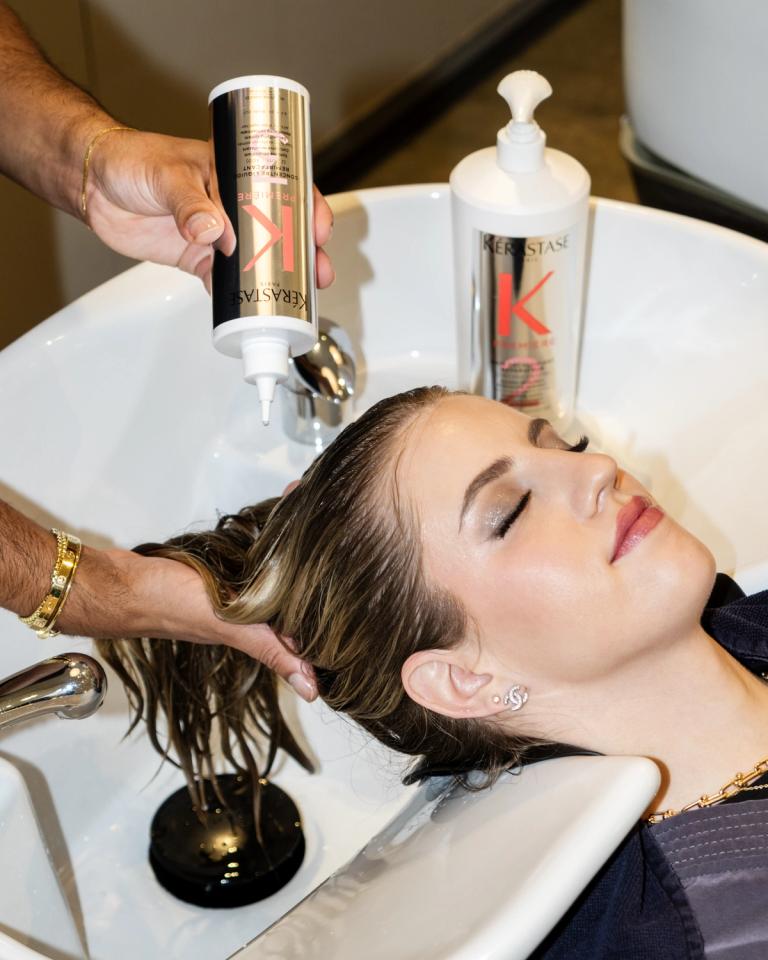
Kérastase Première: for damage complicated by calcium buildup
Kérastase Première is a dual-action, decalcifying and repairing protocol formulated with citric acid and glycine. It is designed for damaged hair affected by calcium accumulation from water, which can contribute to stiffness and dullness. The professional approach combines buildup removal with restorative care so the hair feels softer, smoother, and more resilient.
This can be especially relevant for highlighted, bleached, porous, or rigid-feeling hair. Kérastase reports its own instrumental and consumer testing results for strength, shine, and breakage reduction; individual results depend on the hair’s starting condition and the complete protocol used.
Kérastase Fusio-Dose: customized repair in the salon
Fusio-Dose is a customizable Kérastase in-salon treatment that combines a concentrated base with a targeted booster. After diagnosing the hair, the stylist selects a pairing designed to address two priorities in one service—such as reconstruction and softness, or nourishment and shine.
Unlike a generic at-home mask, Fusio-Dose is mixed fresh for the client and professionally selected according to the hair’s condition. It is an express treatment, making it an effective addition to a haircut, color, or blowout when the hair needs targeted support without a long processing time. Learn more in our guide to Kérastase Fusio-Dose at Fabio Scalia Salons.
L’Oréal Professionnel Metal Detox: for porous, color-treated hair exposed to metals
Metal Detox is designed to target metals such as copper that can accumulate inside porous hair through water exposure. The protocol uses glicoamine, a chelating ingredient small enough to enter the fiber and help neutralize metal deposits. This makes it particularly useful around color, balayage, highlighting, and lightening services, when metal-related reactions can increase the risk of breakage or affect color predictability.
Metal Detox does not replace bond support or a haircut. It addresses a different contributor to damage: metal accumulation within a vulnerable hair fiber.
Milbon Repair Professional Treatment: for severely damaged, overprocessed hair
Milbon Repair is a professional four-step treatment designed for severely damaged or overprocessed hair. The protocol uses hydrolyzed keratins to support internal repair, a reconstructive complex for highly compromised areas, and cellulose to help seal the cuticle. It is a strong option when the hair needs both internal reinforcement and a smoother external surface.
A precision haircut: the repair step products cannot replace
Sometimes the most important part of a recovery plan is removing compromised ends. A thoughtful haircut does not automatically mean sacrificing all your length. The goal is to preserve as much healthy hair as possible while stopping splits from traveling and creating a stronger shape.
How our “Hair ICU” consultation works
At Fabio Scalia Salons, a damaged-hair plan begins with observation and questions—not a one-size-fits-all recommendation. Your stylist may assess:
- Chemical and color history
- Heat-styling frequency and temperature
- Elasticity, porosity, density, and texture
- The location and pattern of breakage
- Mineral or product buildup
- Current shampoo, conditioner, and treatment routine
- Brushes, combs, and hot tools used at home
- Your desired color, length, texture, and maintenance schedule
From there, we can prioritize what the hair needs now and what should wait. In some cases, the healthiest plan is a treatment and trim followed by a gradual color strategy. In others, a customized in-salon ritual and a few changes at home may be enough to improve manageability and reduce future breakage.
How to prevent damaged hair and breakage at home
Choose tools that respect the hair fiber
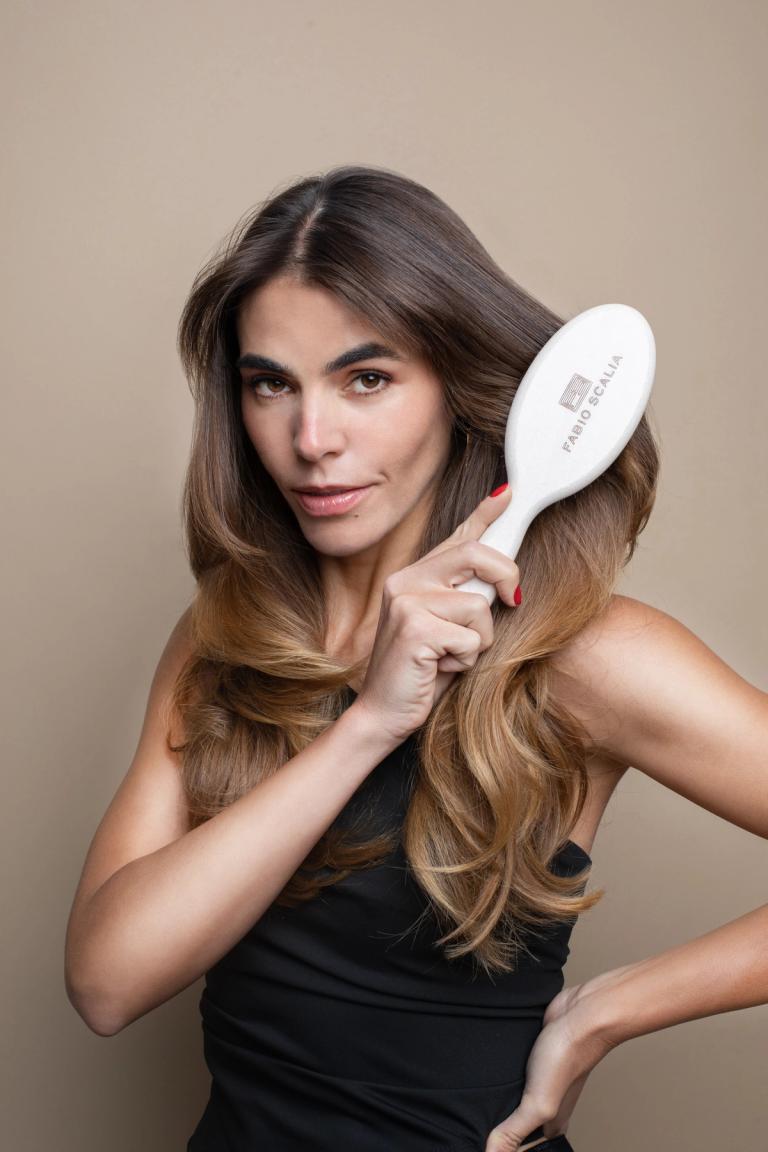
Avoid combs with rough seams, stiff brushes that tear through knots, and metal barrels that become excessively hot. Use a detangling tool appropriate for wet hair and a high-quality boar-bristle brush for controlled smoothing, polishing, and distributing natural oils when appropriate for your texture. The FS Collezione brush collection was developed around professional performance and respect for the scalp and hair.
Detangle from the ends upward
Hold the section above the knot to reduce tension on the root. Begin at the ends and work upward in small sections. Wet hair is more vulnerable to stretching, so use conditioner or a detangling primer and never force the tool through resistance.
Use heat strategically
Apply heat protectant before blow-drying or using hot tools. Keep the dryer moving, avoid pressing a flat iron repeatedly over one section, and use the lowest temperature that achieves the result. Hair should be completely dry before a flat iron is used.
Protect the hair during washing
Shampoo the scalp rather than aggressively scrubbing the lengths. Apply conditioner from mid-lengths to ends, squeeze out water instead of rubbing with a towel, and avoid piling wet hair into a tangled knot.
Space out chemical services
A great color plan considers both the desired shade and the condition of the canvas. Avoid overlapping lightener, communicate your complete color history, and be willing to reach a major transformation over multiple appointments when necessary.
Follow a treatment schedule—not a treatment trend
Too much protein can leave some hair feeling rigid, while heavy moisture alone may not address structural weakness or buildup. Your stylist can recommend the correct balance and adjust it as the hair improves.
How long does it take to improve damaged hair?
Some improvements—such as softness, shine, reduced tangling, and easier styling—may be visible after one professional treatment. Reducing breakage and rebuilding the appearance of fuller, healthier lengths takes consistency. The timeline depends on the severity of the damage, how quickly your hair grows, whether chemical services continue, and how well the fiber is protected at home.
The goal is not a temporary cosmetic reset. It is a sustainable plan that improves the condition of the existing hair while protecting new growth.
Frequently asked questions about damaged hair
Can damaged hair be repaired at a salon?
Yes, professional treatments can reinforce weakened hair, smooth the cuticle, improve moisture balance, reduce friction, remove damaging buildup, and help prevent further breakage. Severely split or disintegrating ends cannot be permanently repaired and should be trimmed.
What is the best salon treatment for hair breakage?
There is no single best treatment for every type of breakage. Chemically weakened hair may need bond or protein support; mineral-stiffened hair may benefit from a decalcifying protocol; metal-exposed, porous hair may need chelation; and dry, rough hair may need moisture and cuticle smoothing. A professional diagnosis determines the right treatment.
Does bond repair fix split ends?
Bond treatments can reinforce compromised hair and reduce future breakage, but they do not permanently fuse split ends. A haircut is the only reliable way to remove a split.
Are boar-bristle brushes better for damaged hair?
A well-made boar-bristle brush can help smooth the cuticle, distribute natural oils, and provide controlled grip without relying on an overheated metal barrel. It should be used with the correct technique and is not a substitute for a flexible detangling brush on fragile, wet hair.
Should I stop coloring my hair if it is breaking?
Not necessarily, but the plan may need to change. Your stylist may recommend pausing lightener, avoiding overlap, choosing a lower-maintenance color, treating the hair first, or reaching the desired result gradually.
Is hair breakage the same as hair loss?
No. Breakage occurs when the hair shaft snaps, often leaving shorter pieces or frayed ends. Hair loss or shedding usually involves strands releasing from the root. Sudden or significant shedding should be evaluated by a medical professional.
Begin your healthy-hair recovery plan in NYC
If your hair is breaking, brittle, overprocessed, or difficult to manage, the answer is not another random mask. It is a precise diagnosis and a treatment plan based on what your hair fiber actually needs.
Book an appointment at one of our NYC salon locations in SoHo or Brooklyn Heights for a personalized consultation and professional treatment recommendation. We will help you protect the integrity of your hair while working toward the color, cut, texture, and finish you love.
Frequently Asked Questions
Can damaged hair be repaired at a salon?
Yes, professional treatments can reinforce weakened hair, smooth the cuticle, improve moisture balance, reduce friction, remove damaging buildup, and help prevent further breakage. Severely split or disintegrating ends cannot be permanently repaired and should be trimmed.
What is the best salon treatment for hair breakage?
There is no single best treatment for every type of breakage. Chemically weakened hair may need bond or protein support; mineral-stiffened hair may benefit from a decalcifying protocol; metal-exposed, porous hair may need chelation; and dry, rough hair may need moisture and cuticle smoothing. A professional diagnosis determines the right treatment.
Does bond repair fix split ends?
Bond treatments can reinforce compromised hair and reduce future breakage, but they do not permanently fuse split ends. A haircut is the only reliable way to remove a split.
Are boar-bristle brushes better for damaged hair?
A well-made boar-bristle brush can help smooth the cuticle, distribute natural oils, and provide controlled grip without relying on an overheated metal barrel. It should be used with the correct technique and is not a substitute for a flexible detangling brush on fragile, wet hair.
Should I stop coloring my hair if it is breaking?
Not necessarily, but the plan may need to change. Your stylist may recommend pausing lightener, avoiding overlap, choosing a lower-maintenance color, treating the hair first, or reaching the desired result gradually.
Is hair breakage the same as hair loss?
No. Breakage occurs when the hair shaft snaps, often leaving shorter pieces or frayed ends. Hair loss or shedding usually involves strands releasing from the root. Sudden or significant shedding should be evaluated by a medical professional.