
How to Keep Hair Healthy: A Maintenance Guide
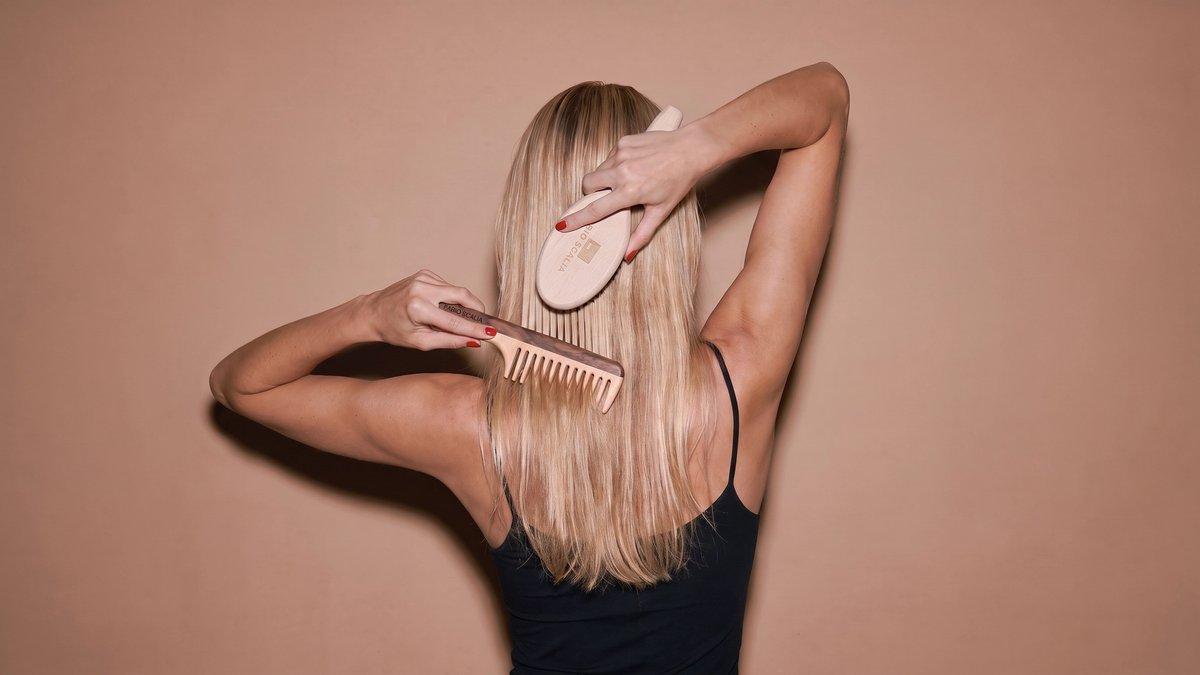
Knowing how to keep hair healthy starts with prevention. Gentle brushing, controlled heat, proper washing, and regular salon maintenance help preserve your hair’s strength, shine, color, and shape between appointments.
Use these daily hair health habits to build a simple, effective luxury hair maintenance routine.
What Should You Do Daily to Keep Hair Healthy?
Brush Gently
Start detangling at the ends and gradually work toward the roots. This reduces pulling, tension, and unnecessary breakage.
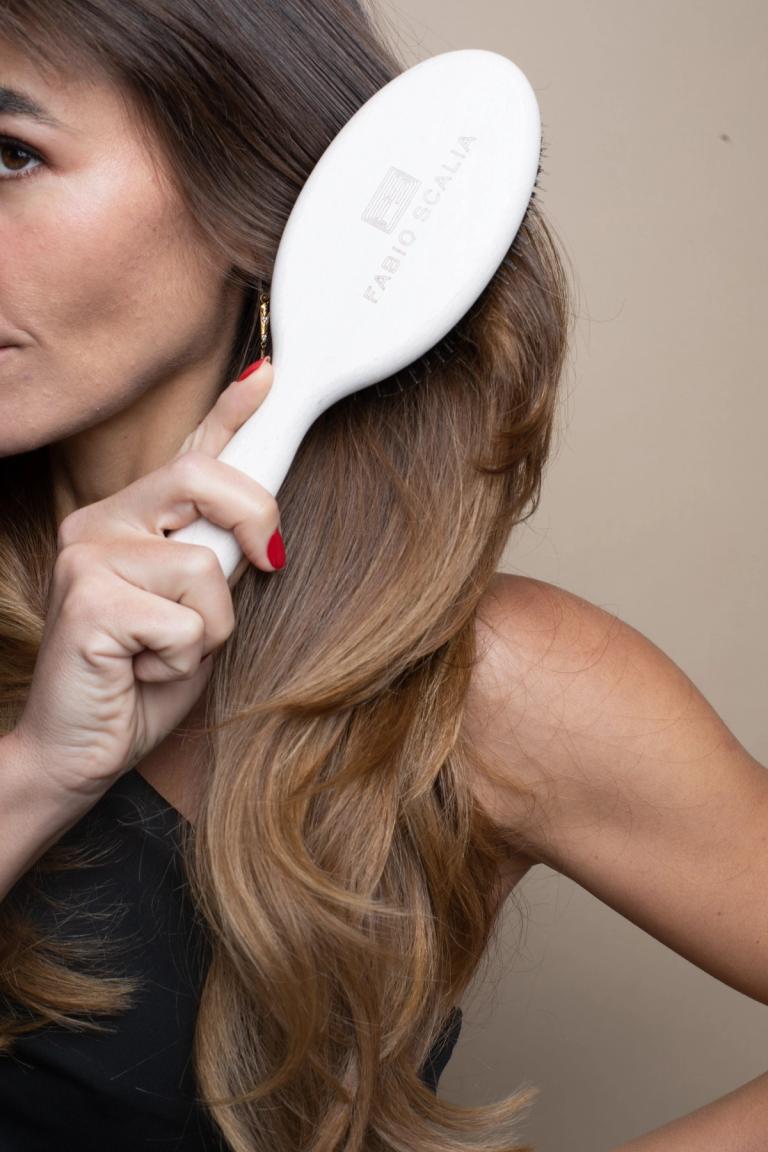
Once detangled, use a quality boar-bristle or mixed-bristle brush, such as an FS Collezione brush, to gently brush from the scalp through the lengths. This helps distribute the scalp’s natural oils and create a smoother, shinier finish.
Curly, coily, fragile, or chemically treated hair may require a different technique. Detangle in sections and avoid brushing textured hair when it is dry if doing so causes breakage or disrupts the curl pattern.
Use Heat Protectant
Apply heat protectant before every blow-dry, curling, or straightening session.
Recommended hot-tool temperatures:
- Fine, fragile, or lightened hair: 300–340°F
- Medium or color-treated hair: 340–365°F
- Coarse or resistant hair: 365–390°F
Use the lowest temperature that effectively styles your hair. Professional tools with consistent temperature control can also help reduce repeated passes over the same section.
Protect Hair While Sleeping
Do not go to bed with wet hair. Wet strands are more vulnerable to stretching, friction, and breakage.
Use a silk or satin pillowcase and secure longer hair loosely with a soft scrunchie. Avoid tight hairstyles that place repeated tension on the hairline.
How Often Should You Wash Your Hair?
There is no universal washing schedule. The right frequency depends on your scalp, texture, lifestyle, styling routine, and chemical services.
When washing:
- Apply shampoo primarily to the scalp.
- Apply conditioner through the mid-lengths and ends.
- Use lukewarm rather than very hot water.
- Double-cleanse only when there is significant oil or product buildup.
- Choose formulas suited to your scalp, texture, and color.
An oily scalp or active lifestyle may require more frequent washing. Dry, curly, or chemically processed hair may benefit from more time between washes.
Does Water Quality Affect Hair Health?
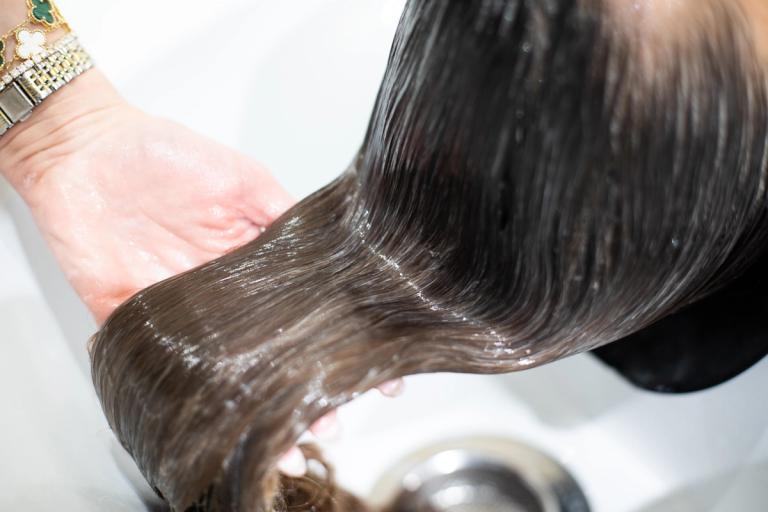
Yes. Hard water can leave mineral buildup that makes hair feel dull, dry, heavy, or difficult to style.
A shower filter may help reduce chlorine and certain impurities, but most standard filters do not completely soften hard water. If mineral buildup is affecting your hair, use an appropriate clarifying product or ask your stylist about a professional chelating treatment.
What Should You Do Weekly for Healthy Hair?
Use a Hair Mask or Treatment
Choose a weekly treatment based on what your hair needs:
- Moisturizing masks for dryness and roughness
- Bond-support or strengthening treatments for lightened or chemically processed hair
- Scalp treatments for excess oil, dryness, or buildup
Avoid layering multiple protein-heavy products without professional guidance, as this can sometimes leave hair feeling stiff or brittle.
Professional treatments from Kérastase, Milbon, or L’Oréal Metal Detox can also be customized based on your hair’s condition and chemical history.
Remove Product Buildup
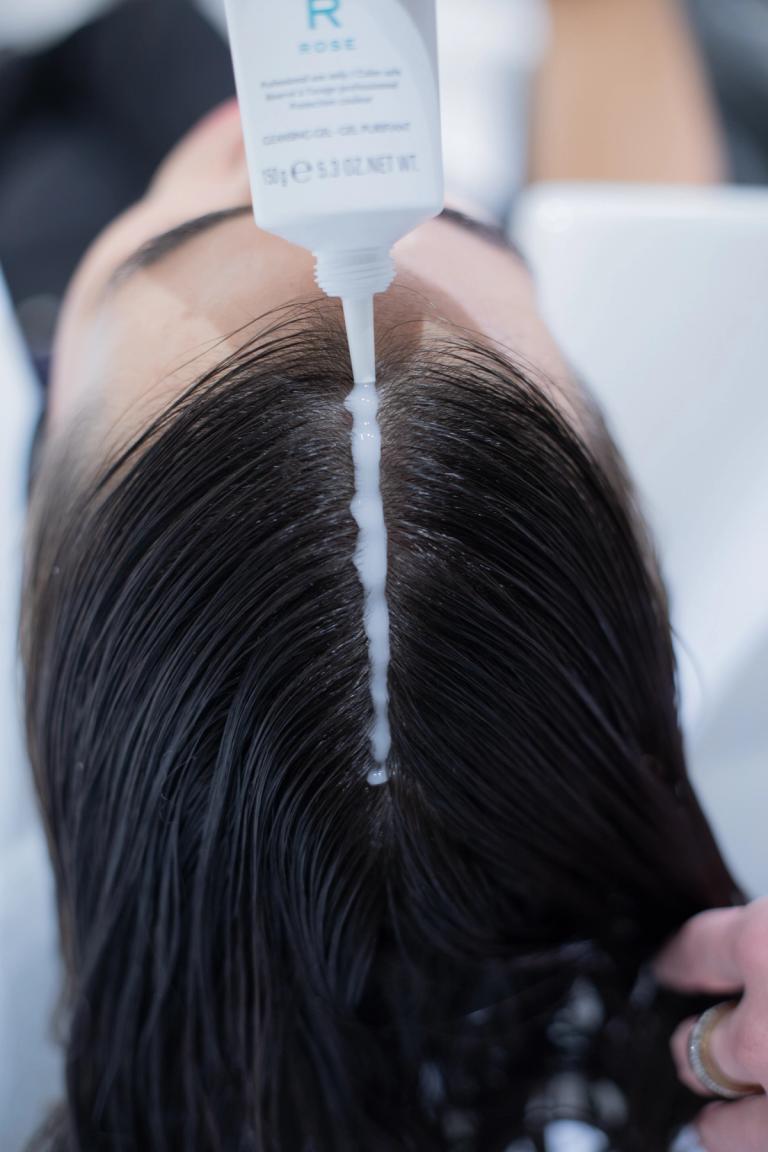
Dry shampoo, oils, hairspray, styling creams, and silicones can accumulate over time. Use a clarifying shampoo periodically, but not as your daily cleanser.
Color-treated hair may require a gentler formula to avoid unnecessary fading.
Clean Your Brushes and Hot Tools
Remove loose hair and product residue from brushes regularly. Wooden FS Collezione brushes should never be submerged or left soaking in water. Use a brush-cleaning tool and follow the proper care instructions for the brush’s materials.
Clean hot tools only when they are unplugged and completely cool.
Does Haircare Need to Change with the Seasons?
Only small adjustments may be necessary:
- Winter: Increase moisture and reduce friction from hats, scarves, and coats.
- Summer: Protect hair from UV exposure, chlorine, and salt water. Wet and condition hair before swimming, then rinse afterward.
- Spring and fall: Clarify buildup, refresh compromised ends, and reassess your color and treatment routine.
Your hair type and condition should guide your routine more than the season alone.
Build a Personalized Hair Maintenance Routine
The best luxury hair maintenance routine is not necessarily complicated. It should address your texture, scalp, chemical history, lifestyle, and styling habits.
At Fabio Scalia Salons, our stylists can create a personalized plan to help protect your haircut, maintain your color, and improve the overall health and appearance of your hair.
Frequently Asked Questions
What are the most important daily hair health habits?
Brush gently, use heat protectant, avoid excessive temperatures, protect hair while sleeping, and use products suited to your texture and scalp.
What are the best professional tips for shiny hair?
Keep the hair properly conditioned, minimize heat damage, remove product and mineral buildup when necessary, and use a quality brush to smooth the hair and distribute natural scalp oils.
Can damaged hair be permanently repaired?
Products and treatments can improve the appearance, strength, and manageability of damaged hair, but severely split or compromised ends usually need to be trimmed. Prevention remains the most effective strategy.
How often should you use a hair mask?
For many people, once a week is sufficient. The ideal frequency depends on the hair’s texture, porosity, chemical history, and current condition.
When should you consult a professional?
Consult a stylist if your hair suddenly becomes unusually brittle, tangled, dull, or difficult to style. Persistent hair loss, scalp discomfort, or changes in density should be discussed with a qualified medical professional.